

You’re at the pub with mates, twenty minutes before kickoff. Someone says: “City at home against relegation fodder? This one’s obvious.”
But here’s the thing: if it really is that obvious, why do sportsbooks stay in business year after year? Why aren’t they going broke paying out all these “sure things”?
The answer isn’t hidden. It’s just that most people don’t stop to think about what a sportsbook actually is.
The Core Business Model: Margin (Vig / Juice)
How Odds Are Set (The Opening Line)
Why Odds Move (And What It Does NOT Mean)
And the second they do, someone always says: “The sharp money knows something.”
There are three main drivers:
1) New information.
An injury update drops. The manager confirms a rotated lineup. The weather turns. The opening line was based on what was known yesterday. Today’s line adjusts to what’s known now.
2) Money flow.
If one side is attracting most of the action, the operator may shift the price to manage exposure. This isn’t about reaching a perfect 50/50 split in every match. It’s about keeping liability within acceptable limits.
3) Rebalancing.
Why? Because operators can set different margin targets, have different risk limits, or use tighter pricing as part of their business strategy. A different price changes the offer, but it doesn’t make the outcome any more predictable. The match itself doesn’t change.
Inside a Sportsbook Operation: Teams, Platforms, and Controls
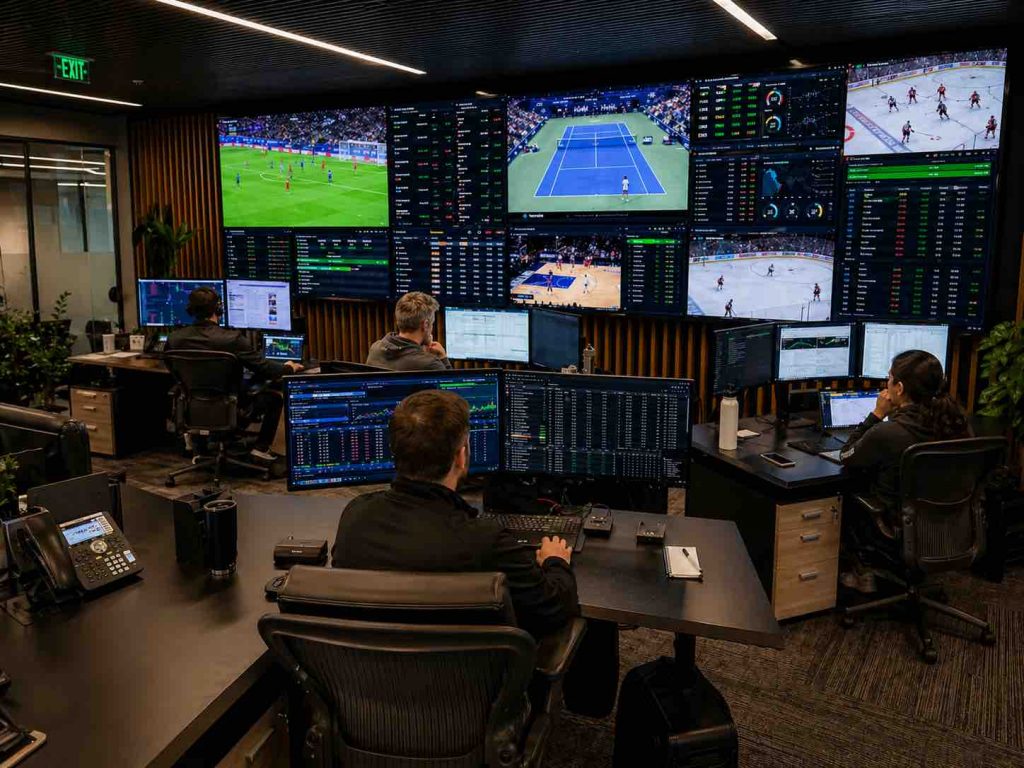
However From the inside, it’s an operating company with a lot of moving parts. Understanding this helps explain why experiences and policies can differ so much across operators.
- Customer Support – handling queries and complaints
- Payments / Operations – processing transactions and operational workflows
- Compliance / AML – meeting regulatory requirements and checks
- Fraud / Risk Controls – monitoring suspicious activity and protecting the system
- Trading / Odds – setting and adjusting prices, managing exposure
- Product / Engineering – building and maintaining the platform (speed, reliability)
- Marketing – acquisition and retention.
- Responsible Gambling – safeguards, interventions, and support pathways
Some operators use their own technology and trading desks, so they control everything from the platform to pricing and risk. Others use third-party or white-label providers, which means the technology, the trading service, or both come from specialized suppliers. The choice depends on cost, speed, regulations, and how much control the operator wants.